
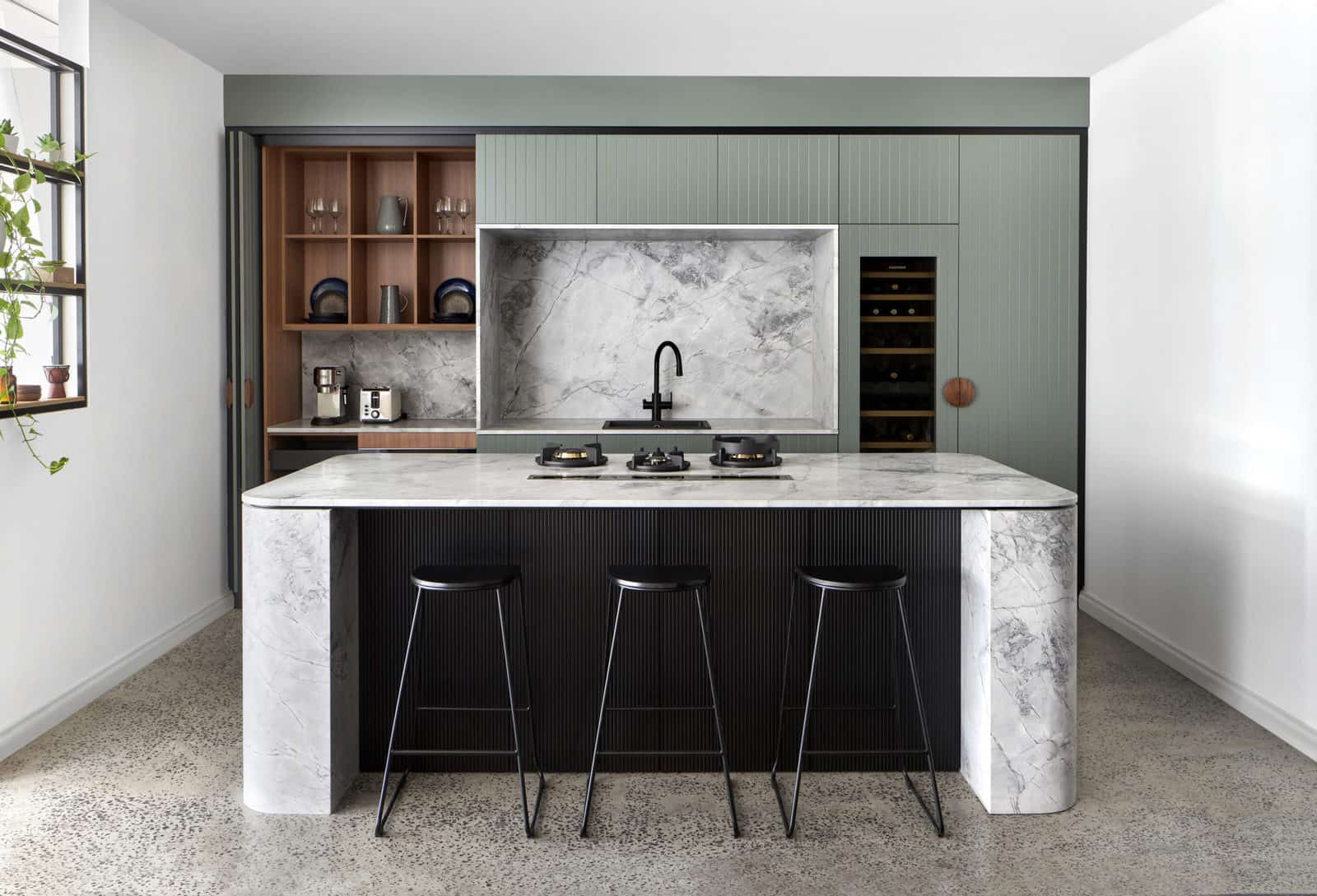
A kitchen renovation is one of the most complex projects a homeowner can take on – and one of the most rewarding. But even the most beautiful materials fall flat if the layout doesn’t work.
Good kitchen renovations start with design principles that have been refined over decades: ergonomics, proportion, flow, and light. Get these right, and everything else follows.
Top Tips
- Ergonomics determines how comfortable and efficient your kitchen is to use day to day.
- Benchtop height, walkway clearances, and appliance placement all follow specific measurements.
- The five kitchen zones are a more practical planning framework than the traditional work triangle.
- Storage and lighting are design decisions, not afterthoughts.
- A qualified kitchen designer will tailor all of these principles to your household.
Function Comes Before Everything Else
The most common mistake in kitchen design is treating it like an interior design project. Finishes matter, but a kitchen that looks great while forcing you to walk ten steps between the fridge and the stove will frustrate you every single day.
Most designers no longer adhere strictly to the Kitchen Work Triangle – the concept of positioning the sink, cooktop, and fridge in a triangle for efficient movement. It still has merit, but modern families use the kitchen differently.
A more practical approach is to plan the space around five zones:
- Consumables (pantry, fridge)
- Non-consumables (crockery, cookware)
- Cleaning (sink, dishwasher)
- Preparation (bench space)
- Cooking (cooktop, oven)
Keeping related items close together reduces unnecessary movement and saves real time.
Getting the Heights Right
Benchtop height affects your posture every time you use the kitchen. The standard is 910-950mm from finished floor to benchtop surface – this suits most adults and teenagers. The old 900mm benchmark has largely been replaced as average heights have increased.
Your designer should account for everyone who regularly uses the kitchen. Family members with mobility considerations, or anyone significantly shorter or taller than average, may need heights adjusted accordingly.
For kitchen islands with seating, allow 300–400mm of leg clearance underneath the overhang, and at least 600mm of bench width per person.

Traffic Flow and Critical Clearances
The kitchen is the busiest room in most homes, and poor flow is one of the most common – and most fixable – design problems. Opening a fridge door should never block the main entry point, and pulling out a dishwasher shouldn’t trap someone at the stove.
Around a kitchen island, leave 900–1000mm between the island and fixed benchtops, walls, or appliances. This allows doors and drawers to open freely and lets two people move past each other without issue. Less than 900mm creates congestion; more than 1400mm between work surfaces wastes steps.
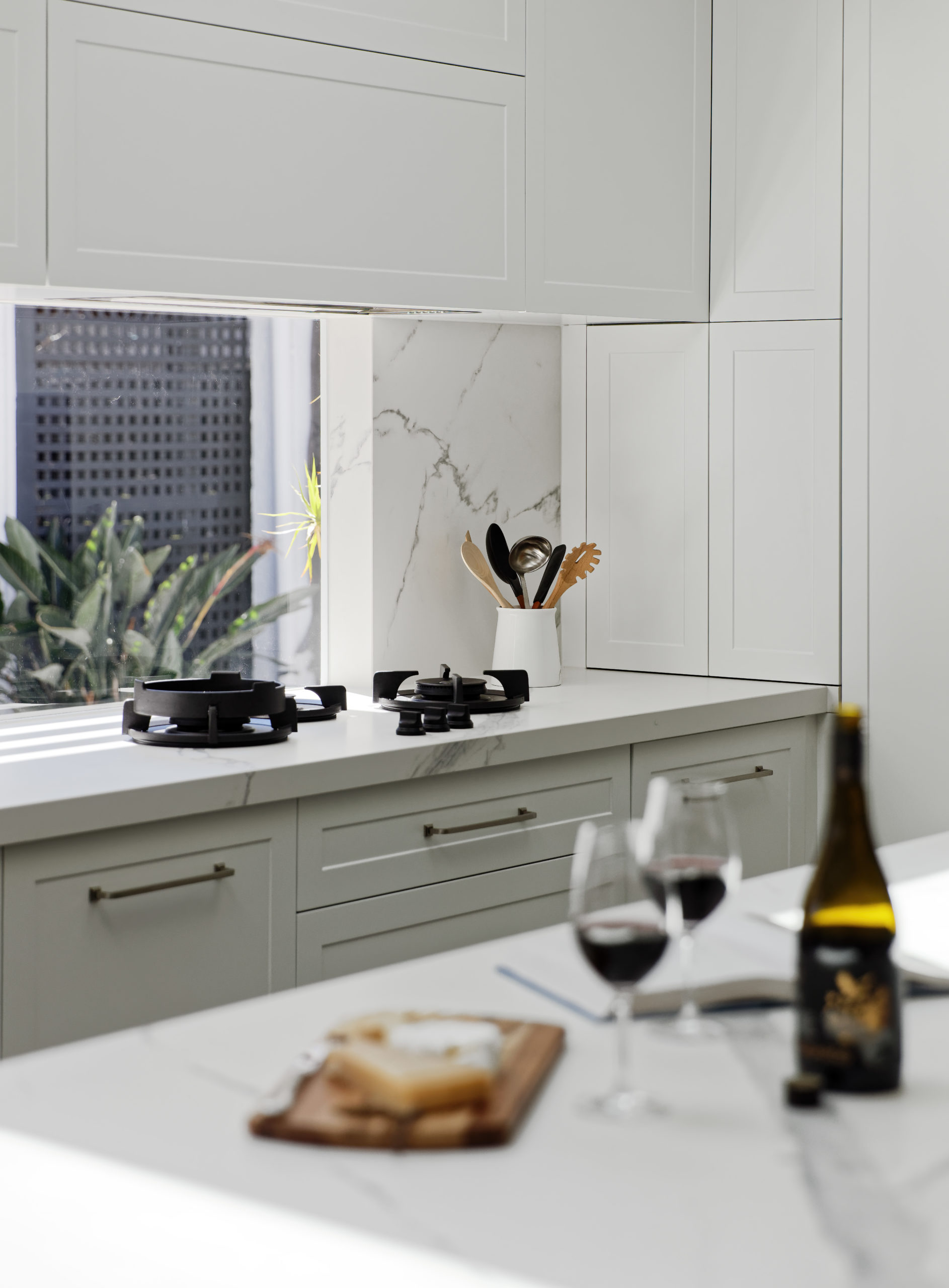
For rangehoods, the minimum clearance in Australia is 600mm above an electric cooktop and 650mm above gas. Most manufacturers recommend 700–750mm. If you have a tall household, raising the rangehood slightly is worth discussing with your designer.
Storage that Actually Works
Under-bench drawers have largely replaced traditional lower cabinets in well-designed kitchens because they provide full access to the contents without crouching or reaching to the back of a shelf. Working with experienced cabinet makers means your storage can be designed around how you actually cook, not just how a standard carcass fits.
Overhead cabinetry maximises vertical space but can feel oppressive in smaller kitchens. A good designer will find the right balance. Consider dedicated storage for pots and baking trays, pull-out pantry columns, and purpose-built compartments for small appliances. The goal of well-designed kitchen cabinet makers is to put everything within reach without having to rearrange half the kitchen first.
Lighting is a Design Decision
Most kitchens rely on a single overhead light source. It’s one of the most common design oversights, and it shows: shadows over the benchtop, glare on splashbacks, and a flat feeling, regardless of how good everything else looks.
Effective kitchen lighting works in layers.
- Ambient light handles general brightness.
- Task lighting – typically under-cabinet strips or pendants over an island – illuminates prep and cooking areas directly.
- Accent lighting can highlight open shelving or a feature splashback.
These don’t need to be complicated, but they do need to be planned before the cabinets are installed.
Ready to Plan Your Kitchen?
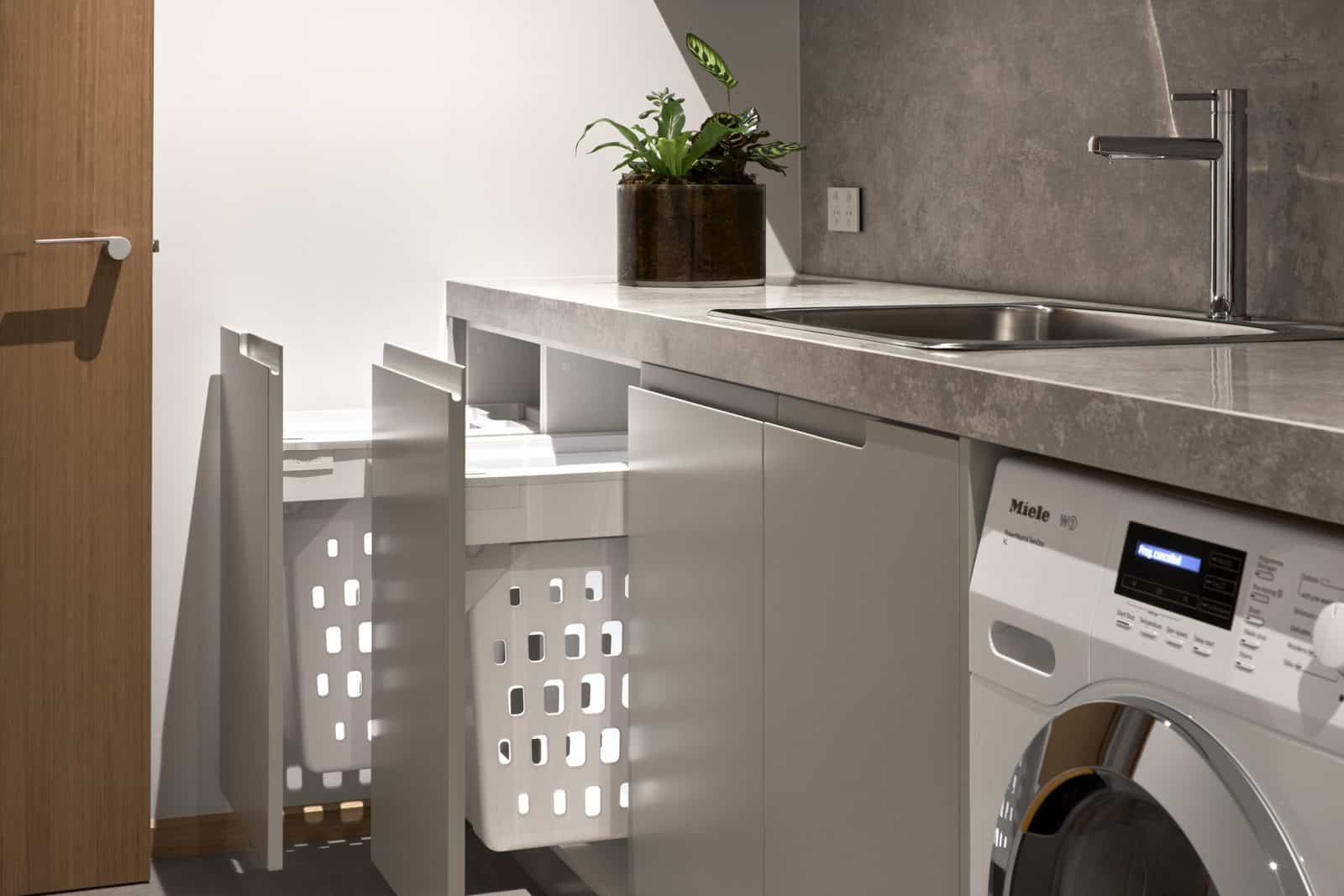
These principles apply whether you’re renovating a compact galley kitchen or designing a large open-plan space. The same thinking extends to laundry renovations – ergonomics, storage, and workflow matter just as much in a laundry as they do in a kitchen.
Mint Kitchen Group’s designers apply these principles to every project, tailoring the layout to your household and your home. Visit one of our Melbourne showrooms or get in touch to explore your options and start designing.
Ready to get started on your kitchen renovation?
Contact the expert kitchen designers at Mint Kitchen Group to create an ergonomic and well-planned kitchen that suits your specific needs.


Leave a Reply