
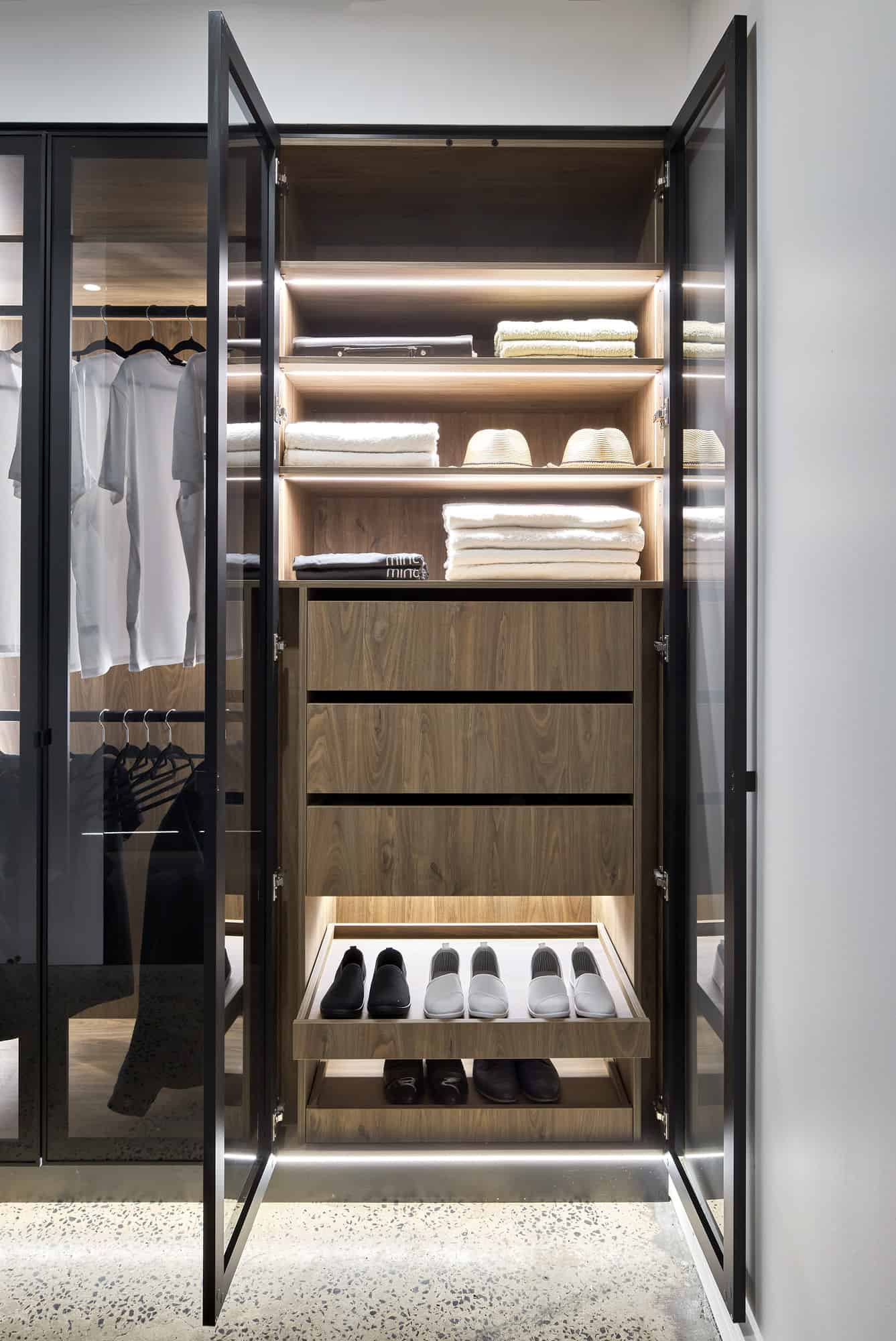
Most Melbourne wardrobes were built for a house that no longer exists. One with fewer people in it, less stuff, and no expectation that a robe would look good with the door open. That gap between what we own and where we store it is driving the biggest wardrobe design trends for 2026: warmer materials, considered lighting, and storage planned around a real wardrobe rather than a standard rail-and-shelf template.
It’s part of a broader shift. The value of alterations and additions approved across Australia in the three months to April 2026 was 14% higher than the same quarter a year earlier, with land constraints pushing more households to renovate what they already have.
Key Takeaways
- Quiet luxury has replaced the high-gloss boutique look. Think warm timber, matt finishes and restraint.
- Fluted and textured fronts are the standout material trend, softening large runs of joinery.
- Layered LED lighting is now expected, not a luxury add-on.
- Low-emission board (E0 or E1) is a growing question from clients with young families.
- Zoned storage designed around your actual clothing beats generic shelving every time.
Quiet Luxury Over Glossy Boutique
The mirrored, gold-trimmed dressing room had its moment. What our designers are specifying now is quieter: oak or walnut veneers, matt polyurethane in muted greens and clay tones, slim aluminium handles or push-to-open fronts, and stone only where it serves a useful purpose, such as a central island bench.
The look reads as expensive because of proportion and finish quality, not ornament. It also ages better, which matters when a wardrobe renovation is meant to last 15 or 20 years rather than one styling cycle.
Texture Is Doing the Heavy Lifting
Fluted and reeded fronts have moved from feature walls into wardrobe joinery, and they solve a genuine problem. A three-metre run of flat doors in a bedroom can feel like a wall. Break it up with vertical fluting, a cane or rattan insert, or a fabric-look laminate, and the same run softens immediately.
Ribbed glass is another one worth considering for walk-in robes. It lets light move between the dressing area and the bedroom without putting your shelves on display.
Lighting Designed Into the Cabinetry
The overhead lighting behind you is why you can’t tell navy from black at 6am. The fix is layered LED: sensor-activated strips inside the robe that come on as the door opens, warm-white lighting under shelves and hanging rails, and a colour temperature close to daylight so colours read correctly.
For walk-in robes and dressing rooms, we’re increasingly wiring lighting into the cabinetry at the design stage rather than adding it later. That means clean cable runs, no visible transformers, and switching that actually suits how you get dressed.
Storage Built Around What You Actually Own
The most valuable trend of 2026 isn’t a finish at all. It’s the move away from the default 50/50 hanging-and-shelving split toward zoned storage measured against how many long garments you have, whether you fold or hang knitwear, how many pairs of shoes need a home, and where the suitcases and spare linen go.
Pull-out trouser racks, shallow jewellery drawers with felt inserts, adjustable shelving, and a dedicated laundry-adjacent zone for ironing all stem from that conversation. It’s also where good wardrobe cabinet makers earn their keep, because the difference between a robe that works and one that frustrates you daily is usually 50mm of shelf depth.
Healthier Materials and Low-Emission Board
More clients are asking what their joinery is made of. Most cabinetry uses particleboard, MDF or plywood, and the resins in these products can release formaldehyde over time. The Australian Government’s YourHome guide notes that Australian manufacturers produce low formaldehyde emission board marked E1 or E0, with emissions certified through quality assurance programs, while some imported products sit at higher levels.
Ask your cabinet maker for the emission class in writing.
Talk to a Designer Before You Commit
If you’re weighing up a robe upgrade this year, the fastest way to avoid an expensive mistake is to work through the layout with someone who builds these every week.
Our team handles wardrobe renovations from first sketch through to installation, and you can see the finishes and mechanisms in person at our Burwood, Moonee Ponds, Richmond or South Melbourne showrooms. Call 1300 767 611 to book a consultation with a design specialist.
Trends are a starting point, not a brief. The wardrobes we’re proudest of in 2026 are the ones shaped around how a particular household lives, and those never date.


Leave a Reply