
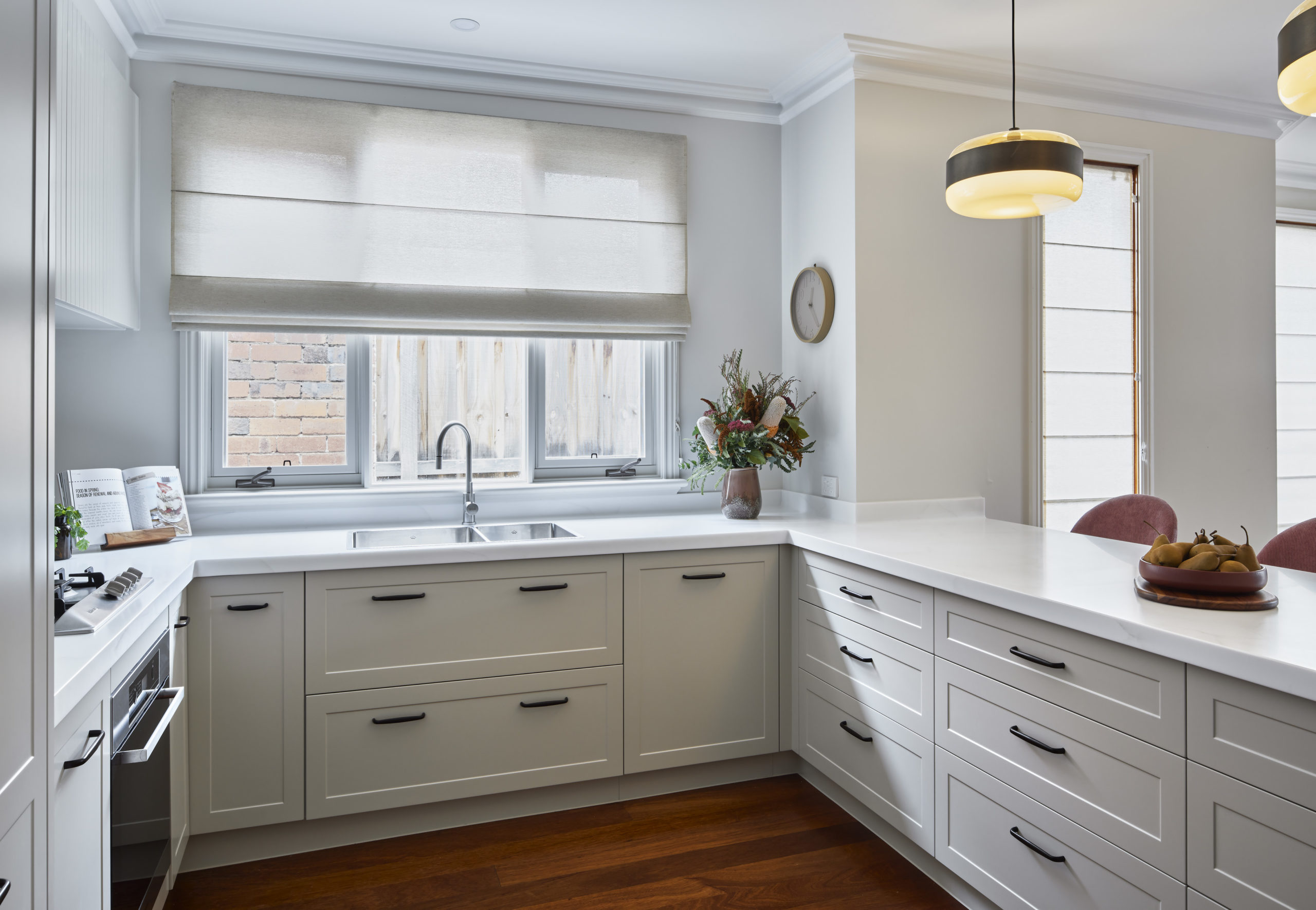
Two homeowners with near-identical kitchens can receive cabinetry quotes that differ by $12,000, and both quotes can be perfectly fair. The cost of kitchen cabinets is decided by a stack of choices made long before anyone picks up a tool: how the boxes are built, what sits behind the door finish, whether you want drawers or cupboards, and how square your walls happen to be.
Cabinetry is typically the largest single line item in a kitchen renovation, which is why it’s worth understanding what actually moves the number.
Key Insights
- Construction method matters most. Flat-pack and stock cabinets sit at the bottom of the range, custom joinery at the top.
- Substrate quality changes both price and lifespan, particularly around sinks and dishwashers.
- Finish is the second-biggest lever, with laminate the most affordable and 2-pac or solid timber the dearest.
- Drawers cost more than cupboards, and quality hardware adds to the cost of every unit in the run.
- Your home itself adds to the cost: heritage walls, apartment access, and out-of-square floors all require extra labour.
Custom, Semi-Custom or Flat-Pack?
Stock and flat-pack cabinets are made in fixed sizes and a limited palette, produced in volume to keep prices down. That works when your kitchen happens to suit standard modules, and you’re comfortable with filler panels covering the gaps.
Custom cabinetry is built to your measurements instead. Every millimetre of an awkward corner, a sloping Federation ceiling or a 2.4-metre pantry wall becomes usable storage rather than dead space.
The price gap between the two is genuine, but so is the difference in what you get. Semi-custom sits in the middle: standard carcasses with tailored door sizes, finishes and internal fittings.

What’s Behind the Door: Substrate and Construction
Most cabinet carcasses in Australia are built from particleboard or MDF, and the grade of board makes a real difference to price. Moisture-resistant board under the sink and around the dishwasher costs more upfront but saves swollen, blown-out panels later.
AS/NZS 1859.2:2017 specifies fibreboard for two service conditions, dry and moisture-resistant, so it’s worth asking which grade a quote is based on. Boards are also classified by formaldehyde emissions, and lower-emission E0 panels generally cost more than E1 panels.
Construction quality matters just as much. AS 4386:2018 sets out the requirements for the design, manufacture, and installation of domestic cabinetry, covering everything from carcass strength to fixings. Cabinetry built to that benchmark, with thicker carcasses and proper edge banding, costs more per unit and lasts considerably longer.
Finish Options and How They Compare
Your finish choice can shift a cabinetry quote by thousands.
- Laminate and melamine: usually the most affordable option, durable, and available in a wide range of colours and textures. Best suited to flat-profile doors.
- Vinyl wrap: still on the affordable end, thermally sealed to MDF for a join-free look, though less heat-resistant near ovens.
- Acrylic: a step up in price, ideal for high-gloss, mirror-like fronts.
- Polyurethane (2-pac): a sprayed and baked paint finish in any colour you like, and the practical choice for routed profiles such as Shaker or Hamptons doors. Expect a meaningful premium over laminate.
- Timber veneer and solid timber: the premium end, offering real grain and, in the case of solid timber, decades of life with maintenance.
Drawers, Hardware and Internal Fittings
Drawers cost more than cupboards, and pot drawers with heavy-duty runners cost more again. Open shelving is the cheapest option, which is why designers often mix formats across a run.
Hardware is the quiet cost. Soft-close hinges and runners from established brands carry a premium per unit, and across a full kitchen, that adds up. They also tend to outlast budget alternatives by years.
Then there are the extras: integrated appliance panels, pull-out bins, corner mechanisms, spice pull-outs and internal cabinet lighting. Each is modest on its own and significant in combination.
How Your Home Affects Kitchen Cabinet Costs
Older Melbourne homes rarely offer square walls or level floors, and scribing cabinetry to fit takes time. Apartment projects add lift bookings, building access rules and body corporate approvals.
Removing and disposing of old cabinetry, patching plaster, and relocating power points or plumbing all fall outside the cabinet price but still fall within the same project budget. Good kitchen cabinet makers will flag these early.

What Your Quote Should Include
In Victoria, domestic building work worth more than $10,000 must be carried out under a written major domestic building contract, and work worth more than $16,000 requires domestic building insurance. Most full kitchen renovations comfortably clear both thresholds.
A quote that itemises board grade, finish, hardware brand and inclusions is far easier to compare than a single figure. When two quotes look wildly different, the specification is almost always where the difference lives.
Cabinet pricing isn’t arbitrary. Once you understand the levers, you can decide where to invest and where to save, and get a kitchen that suits both your home and your budget.
Planning a kitchen renovation and want a realistic cabinetry figure? Our designers work through layout, materials and hardware with you before quoting, so the number you see reflects the kitchen you’ll actually get.
Call 1300 767 611 or visit one of our four Melbourne showrooms.


Leave a Reply